By Sean-Christopher Castle, Managing Partner | Cardinal Law Post-Hurricane Legal Series
A Housing Crisis Exposed by Hurricane Melissa
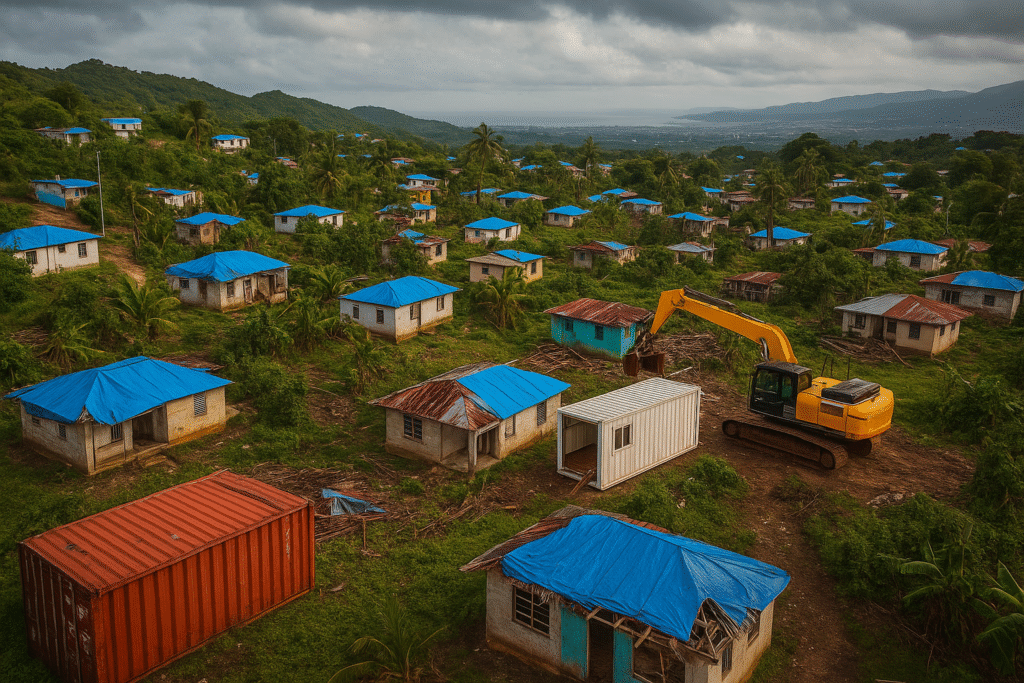
Hurricane Melissa destroyed thousands of homes across Jamaica.
Many of those houses were not block and steel. They were zinc and board structures assembled over time, often without structural reinforcement, proper anchoring, or engineering input.
For countless families, these homes sat on land they did not legally own.
Much of the damaged housing stock consisted of informal settlements built on lands owned by the Government or private individuals.
Replacing these fragile structures with durable, engineered modular or container homes would be a genuine upgrade in safety, dignity, and long-term resilience.
Traditional block-and-steel construction remains important. However, it cannot meet the urgent demands of Jamaica’s post-hurricane-Melissa recovery. It is too slow, too costly, and too labour-intensive to address the scale of displacement.
Modular, container, and pre-fabricated homes offer an alternative that is fast, strong, affordable, and scalable. As a conveyancing and real estate attorney, I believe these housing solutions deserve serious national application.
1. What Are Modular, Container, and Pre-Fabricated Homes?
These three housing models differ in design and assembly but share common strengths.
Container Homes
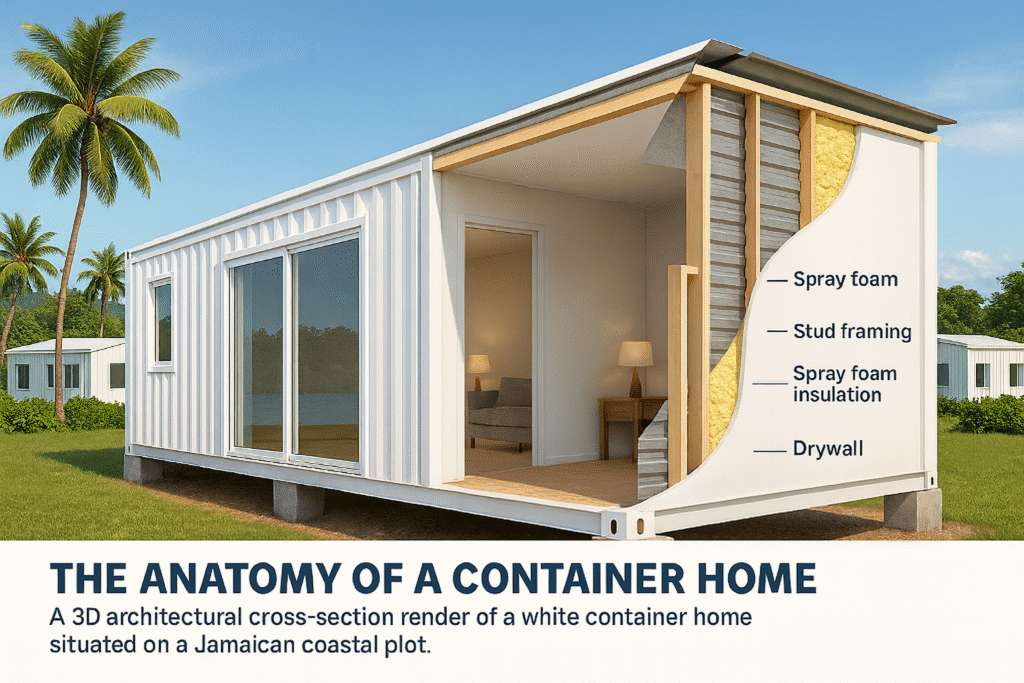
Converted shipping containers designed as living spaces. Durable, fire-safe, wind-resistant.
Modular Homes
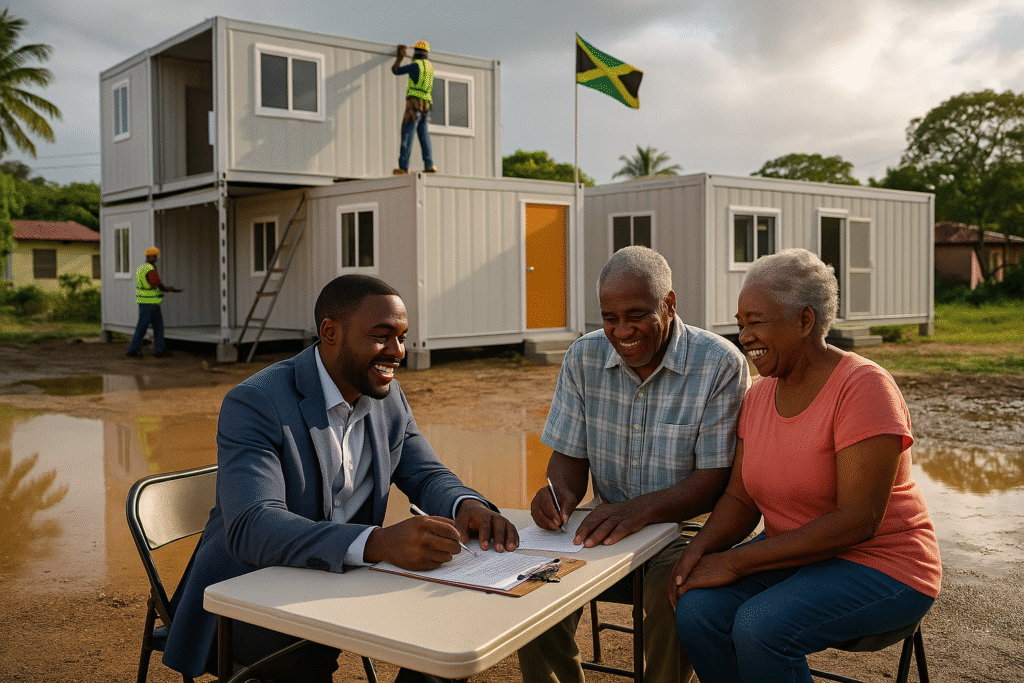
Factory-built residential modules assembled onsite with engineered precision.
Pre-Fabricated Homes
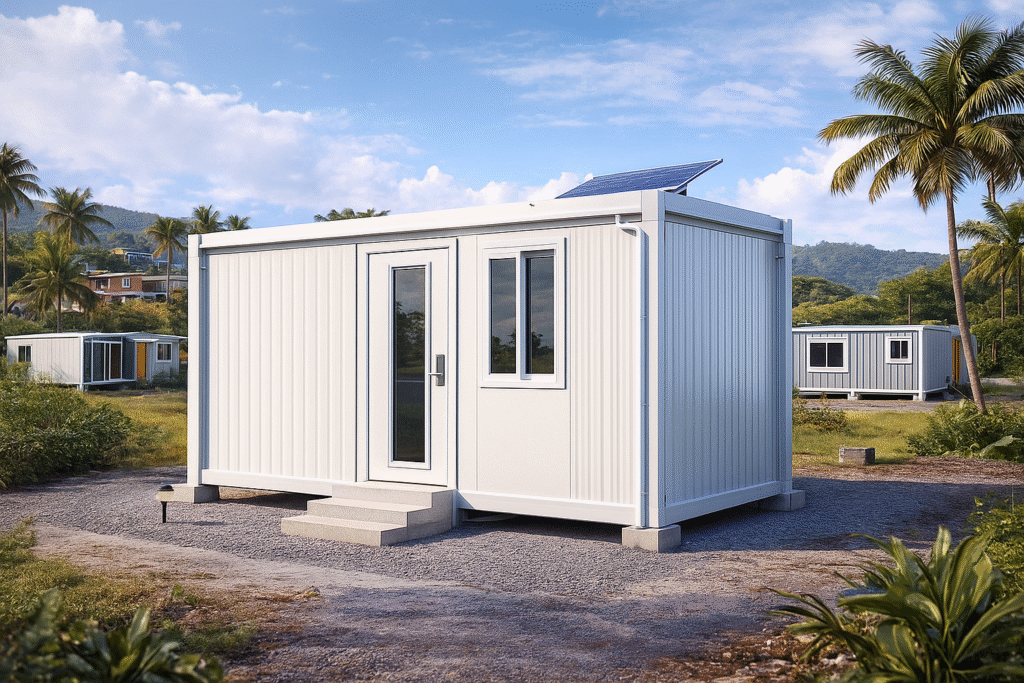
Wall panels and components manufactured offsite and installed on the property.
What they all offer:
- dramatically faster construction
- predictable costs
- reduced waste and theft
- hurricane-strength resilience
- factory-level quality control
This is why the National Housing Trust (NHT) has moved to procure 5,000 container homes, according to a JIS release:
This same JIS article also references a 90-day timeline for housing solutions to begin rolling out.
2. Why Jamaica Needs These Solutions Now
Speed of Installation
Once the foundation is ready, a modular home can be placed and set up in as little as one hour.
This is a transformative option for families displaced by Melissa.
Affordability and Predictability
Factory production provides better cost control than traditional construction.
There is less waste, fewer delays, and less vulnerability to material shortages.
Durability and Safety
Modular and container homes provide significantly better protection than zinc and board dwellings.
They withstand wind loads, flooding, and fire hazards more effectively.
Scalability
These units can support:
- emergency recovery
- low-income housing
- rural upgrades
- starter-home communities
- tourism and workforce housing
Jamaica needs solutions that work fast and work well.
3. Public Expectations Are Accelerating
The Government has indicated that housing units should begin rolling out within 90 days of procurement.
However, the Jamaican public is not observing passively.
Private citizens, diaspora groups, churches, and public figures have already taken action.
For example, Asafa Powell has personally delivered container homes to affected persons using private support and rapid mobilization efforts.

These private initiatives are highly visible and become natural benchmarks for Government efficiency.
The public will naturally compare the State’s rollout time against what individuals are already accomplishing.
This makes the Government’s procurement decisions even more important.
4. Procurement Must Be Fast, Transparent, and Technically Sound
The success of modular housing depends on selecting experienced, proven suppliers.
The risks of getting this wrong include:
- structurally unsafe units
- inadequate insulation for Jamaican climate
- corrosion problems
- electrical or plumbing defects
- building code failures
- late delivery
- warranty complications
- logistics breakdowns
An example of proof of concept is the Royal Estates (Rasta City) development in West Kingston.
The units there were provided by Jamaica MVP Imports Limited, a client of Cardinal Law, a licensed, tested, and proven supplier of modular and container homes in Jamaica.
Their work demonstrated that properly engineered modular solutions can meet Jamaican environmental, climatic, and durability standards.
The NHT itself, a self sufficient entity, has successfully incorporated modular units into past projects.
Its previous decisions to partner with reputable suppliers show that modular homes can work well in Jamaica when proper engineering, procurement, and oversight are applied.
The lesson is clear.
During national recovery, Jamaica cannot rely on untested companies.
Procurement must prioritise firms with verified capacity, certifications, and experience delivering safe, compliant units in Jamaican conditions.
5. Legal Due Diligence for Buyers, Developers, and Agencies
As a conveyancing and development attorney, these issues are essential.
Building and Planning Approvals
Even modular homes require full compliance with:
- the Building Act
- parish council planning approvals
- fire and electrical safety codes
- structural engineering certifications
- onsite foundation approvals
Environmental Oversight
National Environment and Planning Agency (NEPA) must be involved in:
- environmental screening
- drainage and flood management
- community planning
- density and land-use assessments
- ecological impact
- restrictive covenant review where necessary
NEPA’s oversight ensures these communities are safe and sustainable.
Insurance Considerations
Insurers will need clear documentation to underwrite modular and container homes, including:
- engineering specs
- wind load certification
- material standards
- foundation details
This will influence premiums, deductibles, and replacement cost calculations.
Financing Considerations
Financial institutions will assess whether modular homes qualify for:
- mortgages
- construction loans
- collateral valuations
- long-term value retention
NHT already has made statements which lead one to conclude that they will be financing modular units.
Private lenders will follow once valuation and compliance frameworks are formalized.
6. Land Ownership, Titles, and Restrictive Covenants
Modular housing changes building methods but not the laws that govern land.
Two Contracts may be required
A proper modular housing transaction requires:
- Agreement for Sale of Land
Ensures the purchaser receives a registered certificate of title.
2. Agreement for Construction and Delivery of the Modular Unit
Covers:
- manufacturing
- shipping
- installation
- warranties
- defects-liability period
- utility connection
- delivery timelines
- remedies for delay
These contracts most likely will need to be contemporaneously signed and contingent upon one another. They govern different but related rights and obligations.
Titles Must Still Be Issued
Because so many families previously occupied land illegally or informally, formal titling must accompany any modular rollout.
Homes without titles recreate the same vulnerabilities that existed before Hurricane Melissa.
Every purchaser should receive a registered title for their land.
Restrictive Covenants Must Be Updated
Traditional covenants address roofing, aesthetics, building size, and setbacks.
Modular housing introduces new considerations such as:
- elevation and foundation design
- future add-ons
- uniformity in appearance
- corrosion protection
- utility access
- environmental safety
The NLA, NEPA, and Municipal Corporations must collaborate to draft updated covenants for these new communities.
7. The Role of Modular Homes in Jamaica’s Future
Modular homes are not a temporary fix.
They can:
- reduce NHT waiting lists
- replace unsafe zinc and board dwellings
- expand low-income and starter housing
- support rural and urban redevelopment
- lower construction costs
- provide climate-resilient infrastructure
- reduce squatting and informal settlements
Jamaica has a chance to rebuild in a smarter, more resilient way.
A Note to Homeowners, Purchasers, Developers, and Policymakers
Modular and container homes are more than a trend.
They are a practical and powerful tool for upgrading Jamaica’s housing stock.
However, proper legal oversight is essential.
This includes land titling, contracts, procurement review, structural compliance, insurance, financing structures, and environmental approvals.
Cardinal Law can assist with all aspects of modular housing development, including:
- conveyancing
- titling
- procurement support
- contract review
- land use planning
- regulatory compliance
About the Author
Sean-Christopher Castle is a Partner at Cardinal Law, Attorneys-at-Law, based in Kingston, Jamaica. His practice focuses on real estate and development law, civil and commercial litigation, employment law, bankruptcy and insolvency, and strata and property management.
He regularly advises clients on property transactions, construction matters, and risk management related to hurricanes and natural disasters.
You may e-mail him at seanc@cardinallawja.com, call 876-728-9757, or WhatsApp 876-530-1787.
Related Reading
- Property Sales in Jamaica After a Hurricane: Who’s Responsible for the Damage?
- After the Hurricane: 7 Legal Steps to Protect Yourself and Your Family
Disclaimer
This post was written by an attorney, but not your attorney. It is shared for general information and education, not for any specific legal advice. Every matter is unique, and laws or government policies may change. You should always consult your own attorney-at-law before making decisions that could affect your rights or obligations.
While every effort has been made to ensure accuracy, Cardinal Law, Attorneys-at-Law assumes no responsibility for any loss or action taken in reliance on this publication.
© Cardinal Law, Attorneys-at-Law. All rights reserved.
Cardinal Law, Attorneys-at-Law
Kingston, Jamaica | www.cardinallawja.com | @cardinallawja